 News, Views & Insights
A Modern eTextbook on Laplace Transforms for Engineering, Science and More
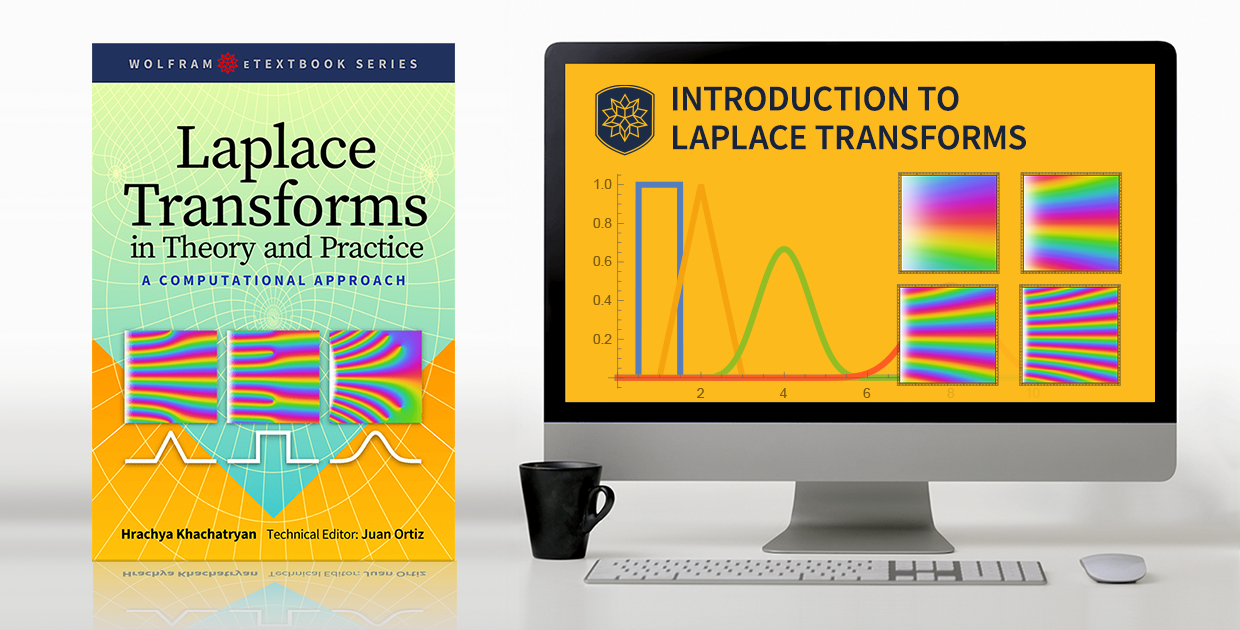
The Laplace transform is such an effective tool for solving problems in the fields of science and engineering—it’s one of the main tools available for solving both ordinary differential equations (ODEs) and partial differential equations (PDEs). I’m excited to announce that the notebook version of Laplace Transforms in Theory and Practice: A Computational Approach by Hrachya Khachatryan is now available as a free download from Wolfram Media for all the world to learn this beautiful subject.
In this book, we dive deep into:
- The theory behind the Laplace transform
- Practical applications, both in and out of the classroom
- Wolfram Language’s Integrate, LaplaceTransform and InverseLaplaceTransform functions
The contents of the book are based on the Wolfram U course Introduction to Laplace Transforms, which is available for free as an interactive video course.
A Quick Look into Laplace Transforms in Theory and Practice
This book can be used by undergraduates as a textbook for a formal course on Laplace transforms or as supplementary material for such a course. The book also contains more advanced material (e.g. chapters on asymptotic expansions of the Laplace transform and numerical inverse Laplace transforms), which can be beneficial for both graduate students and researchers. We have tried to keep the book self-contained; however, some prior knowledge of calculus and complex analysis is required for a better understanding of the book.
The 25 chapters presented here are organized into three sections to study the theory and applications of the Laplace transform. The first and second sections introduce the Laplace transform and its inverse, respectively, covering essential properties, such as linearity, scaling, translation theorems and the convolution theorem. We also explain methods for evaluating Laplace and inverse Laplace transforms, including the Bromwich inversion formula for the inverse transform, asymptotic expansion methods, numerical methods and more. The third section is dedicated to applications of the Laplace transform in differential equations (ODEs, PDEs, integral equations, fractional differential equations) across various fields of physics and engineering. Engineers will find this section useful for studying control systems.
The powerful symbolic and numerical computational capabilities of Wolfram Language, along with its robust visualization tools, provide an ideal environment in which to study this subject.
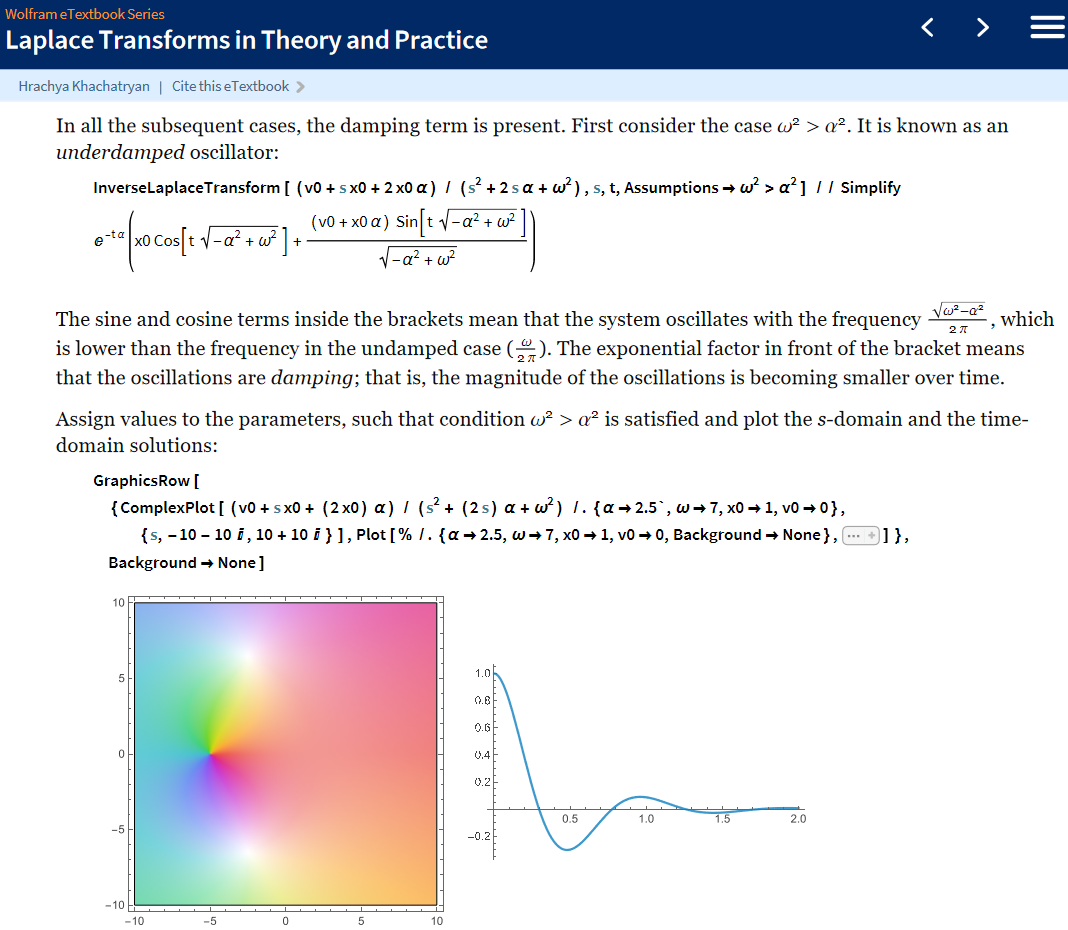
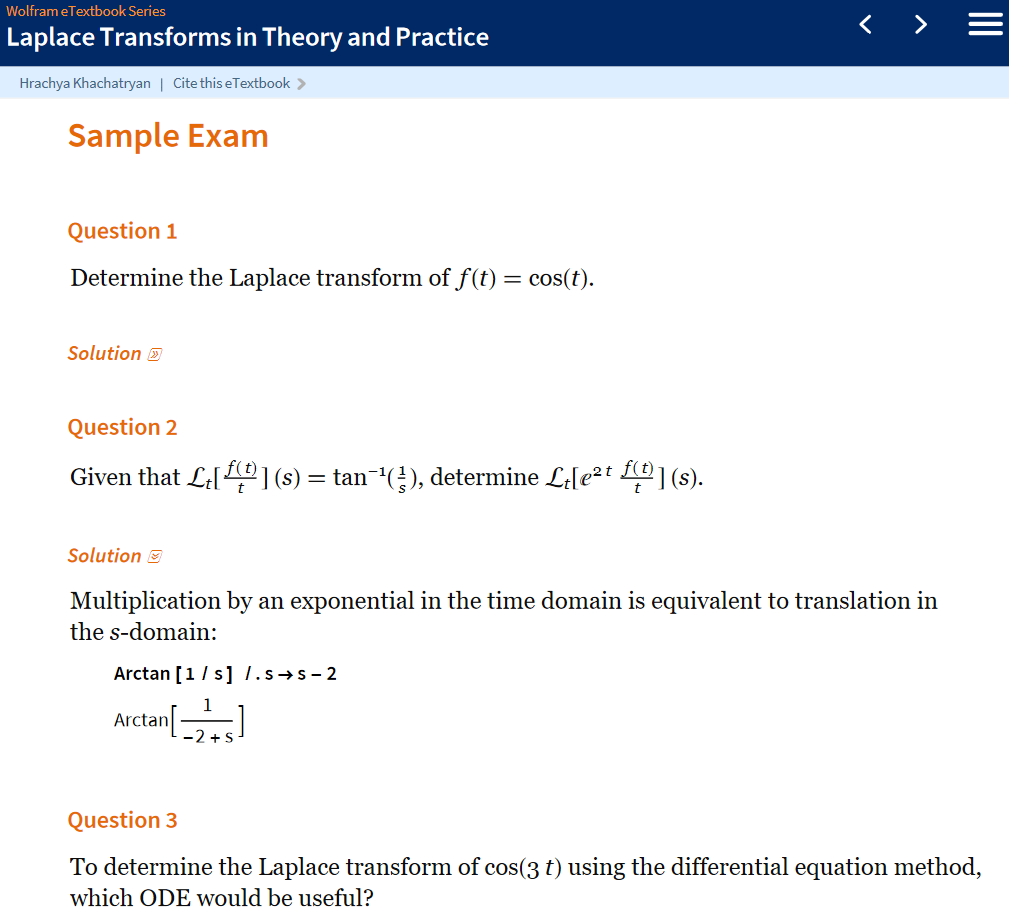
Many examples and exercises are included to help the reader understand and apply the practical side of Laplace transform theory. The included examples use simple arguments to keep the focus on mastering essential concepts rather than sophisticated proofs. Solutions to exercises are presented at the end of each chapter. The final chapter, “Laplace Transforms in a Nutshell,” summarizes the book as a neat study guide for readers. The book also includes a sample exam covering most of the chapters and a table of Laplace and inverse Laplace transforms.
Following the success of Essentials of Complex Analysis: A Computational Approach by Marco Saragnese, this book continues the Wolfram eTextbook Series in tackling typically abstract and pure mathematics with Wolfram Language tools. Expect more books in this series on advanced topics soon, including Special Functions from Theory to Application: A Computational Approach by Tigran Ishkhanyan in the next few months. Also keep an eye on Wolfram social channels and our series webpage for opportunities to sign up for more prerelease editions of forthcoming books in the series. For more information, please contact publishing@wolfram.com.
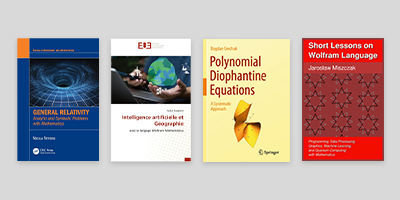
| Check out more books featuring Wolfram Language and other Wolfram technologies on the Wolfram Books page or contact Wolfram Media with your own publishing ideas. |
Comments