 News, Views & Insights
Essentials of Complex Analysis: A Free, Interactive eTextbook from Wolfram Media
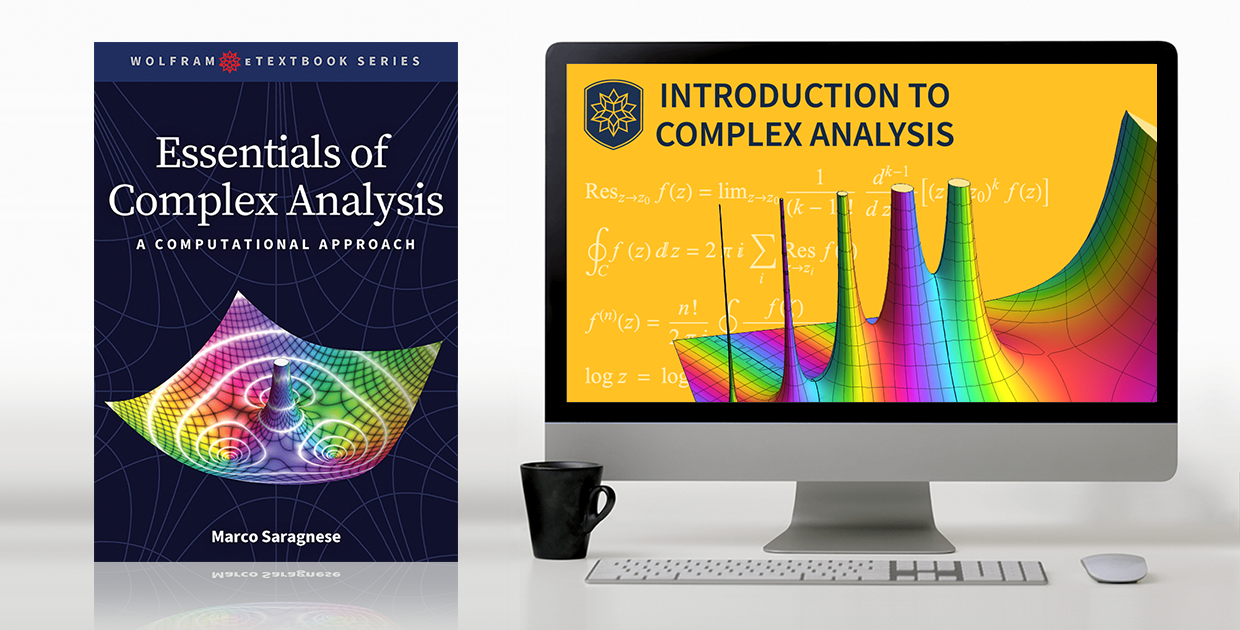
Whether you’re a student in mathematics, engineering or scientific fields, you’re likely to encounter complex analysis—the study of complex numbers and complex functions.
For mathematicians, complex analysis is a beautiful subject that provides powerful connections between apparently distant areas of mathematics.
For physicists, complex numbers are part of the language of nature: in order to formulate the laws of quantum physics, complex numbers are required. It is for this reason that physics students are often required to complete a course in complex analysis before they take a course in quantum physics.
Techniques and tools derived from complex analysis are also important for engineers because they often provide the simplest way to solve certain differential equations. The applications to the real world are just too many to count.
With so many students and Wolfram Language users depending on the field, we are pleased to announce our newest free digital textbook, Essentials of Complex Analysis. The eTextbook is written to be an accessible introduction to the basics of the subject and a companion to the free online course, where the material is divided into video lessons and accompanied by exercises, quizzes and a final exam. The book assumes some familiarity with single-variable and multivariable calculus, but no previous knowledge of complex analysis is required. Print and Kindle versions of the book are expected to be available soon.
Outline of the Book
The book covers in a brief, accessible format the main topics typically addressed in a first course in complex analysis: complex numbers, analytic functions, the Cauchy–Riemann equations, singularities and residues, Cauchy’s theorem and complex integrals. The emphasis is not on rigorous proofs but on accessible exposition and solved examples.
A final section on applications of complex analysis highlights some topics that an interested student could pursue in further studies. This section contains chapters on applications to transcendental equations, definite integrals, the gamma function, elliptic functions and more.
Examples, Exercises and Solutions
The book contains numerous solved examples as well as exercises that students are encouraged to solve, with or without the use of Wolfram Language.
All exercises contain a solution so that no reader is left wondering whether their own result was correct or not.
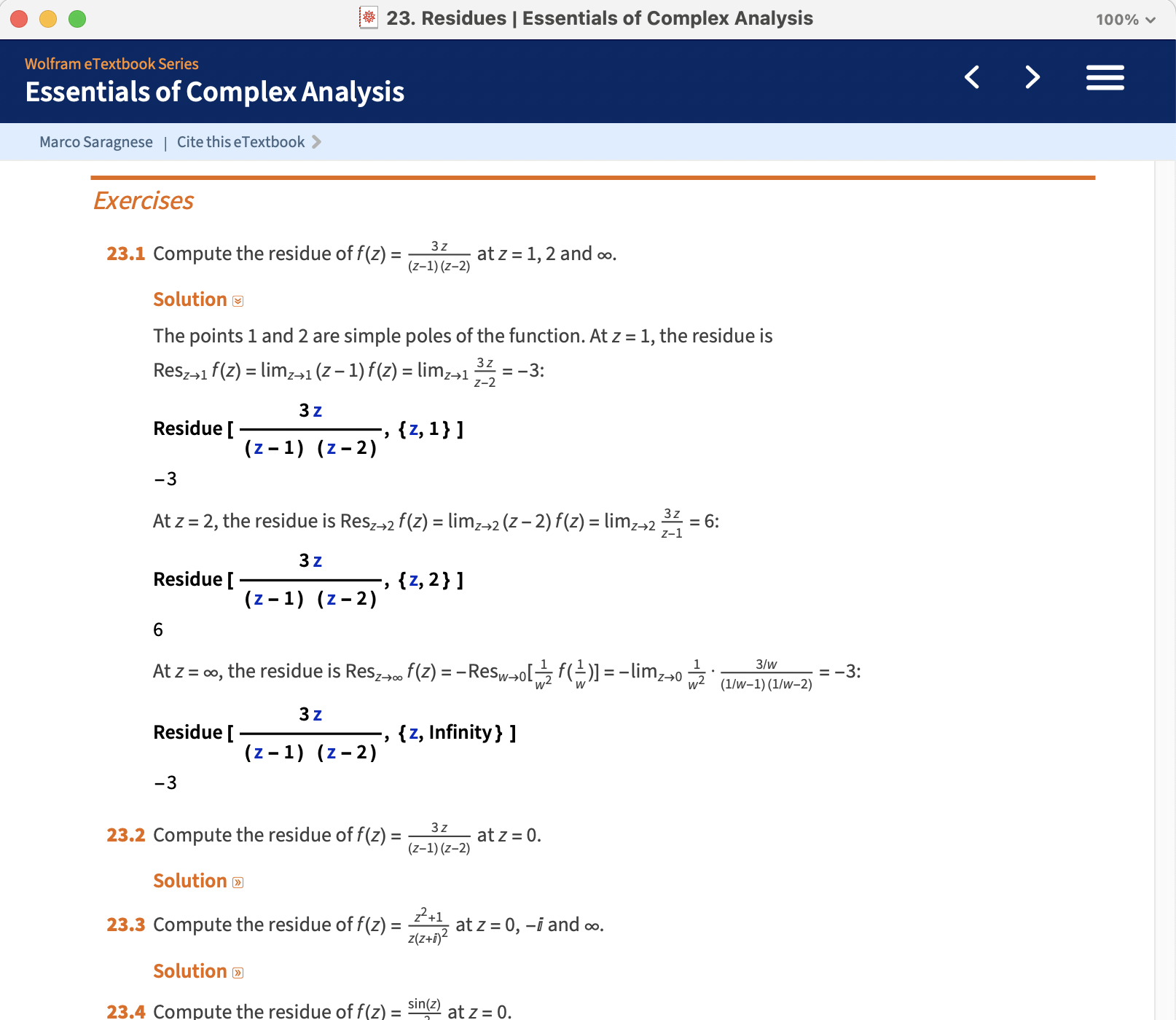
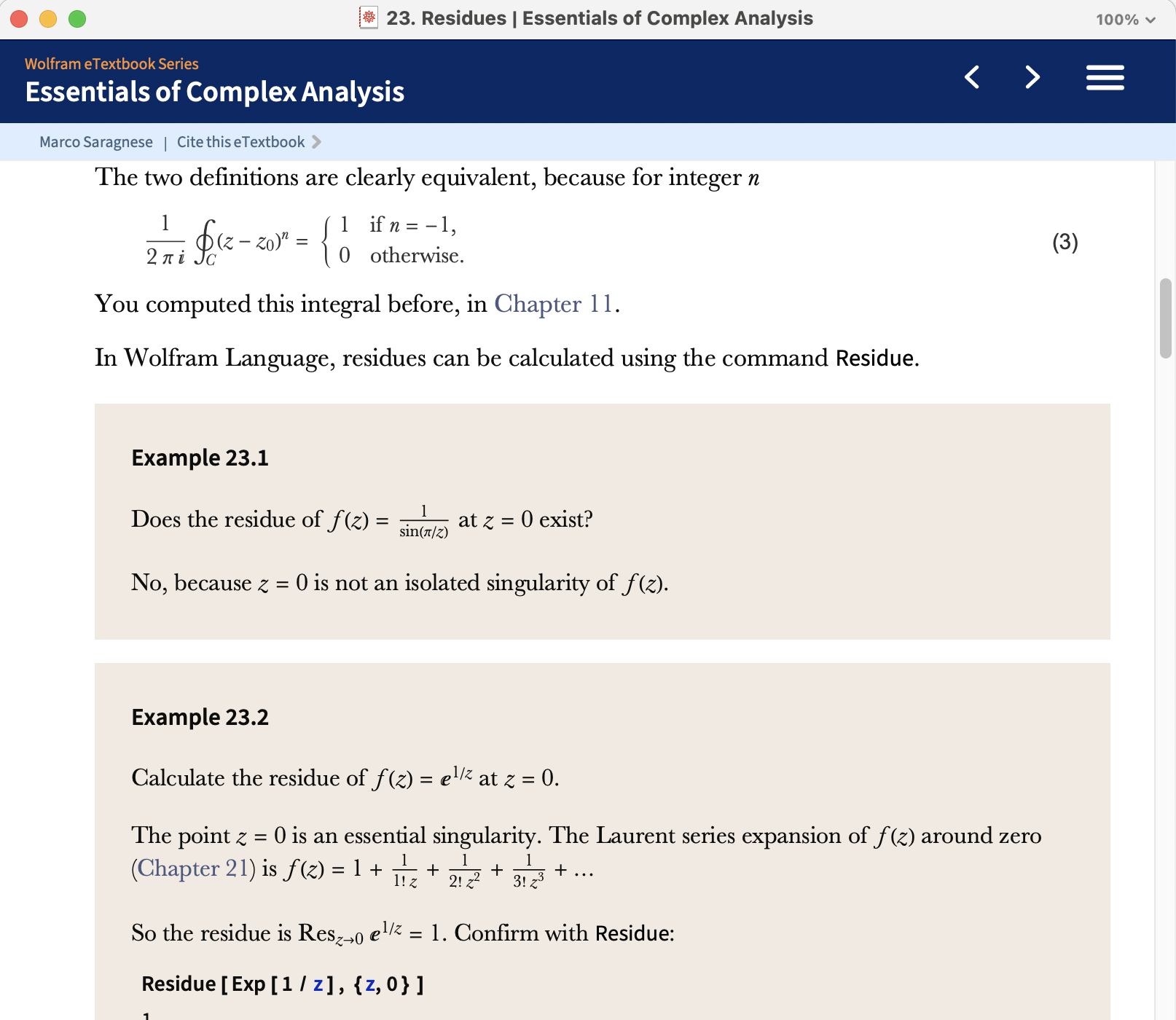
Explanations are interspersed with solved examples that explain, step by step, how to approach simple problems immediately after the concepts are introduced.
Imaginary Numbers and the Real World
In the book, the final section on applications contains introductory material on transcendental equations, definite integrals, the gamma function, Laplace transforms, hydrodynamics and elliptic functions. While these topics are not developed in great detail, they help bridge the gap between abstract mathematics and areas where complex analysis is applied and can thus motivate the reader to pursue them further.
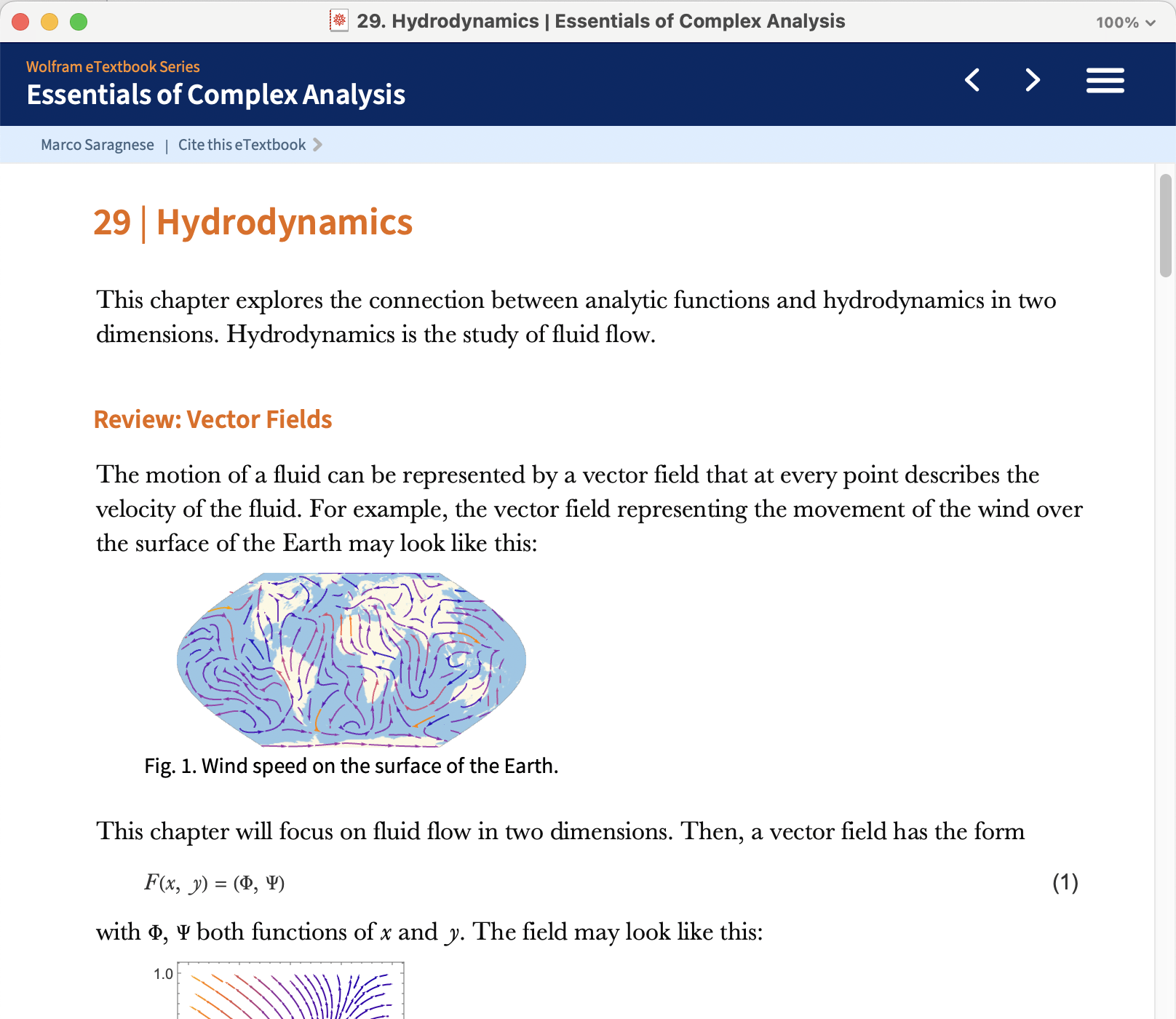
Visualization in Complex Analysis
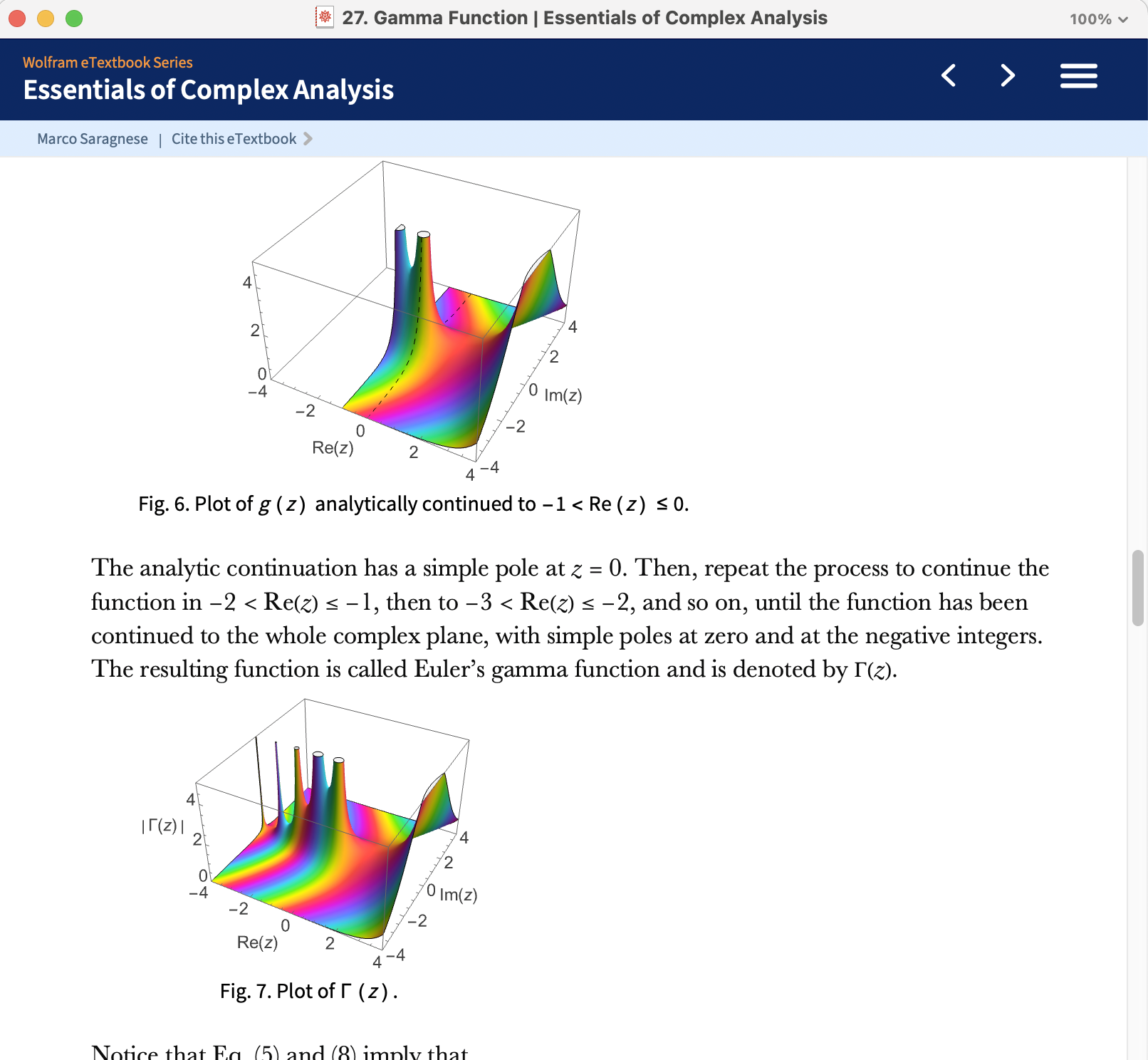
Complex analysis has deep connections to geometry and even to the study of symmetries. Today, it is possible to plot difficult complex-valued functions with just a few lines of code using built-in functions such as ComplexPlot3D, and to create compelling animations for geometrical concepts that are much more vividly expressed in pictures than in words—all in the world of Wolfram Language.
We have taken advantage of these possibilities by including interactive animations that visualize the geometric conformal meaning of analytic functions, animations describing the Riemann sphere and more, which will be most effective in an ebook format by actively engaging the reader.
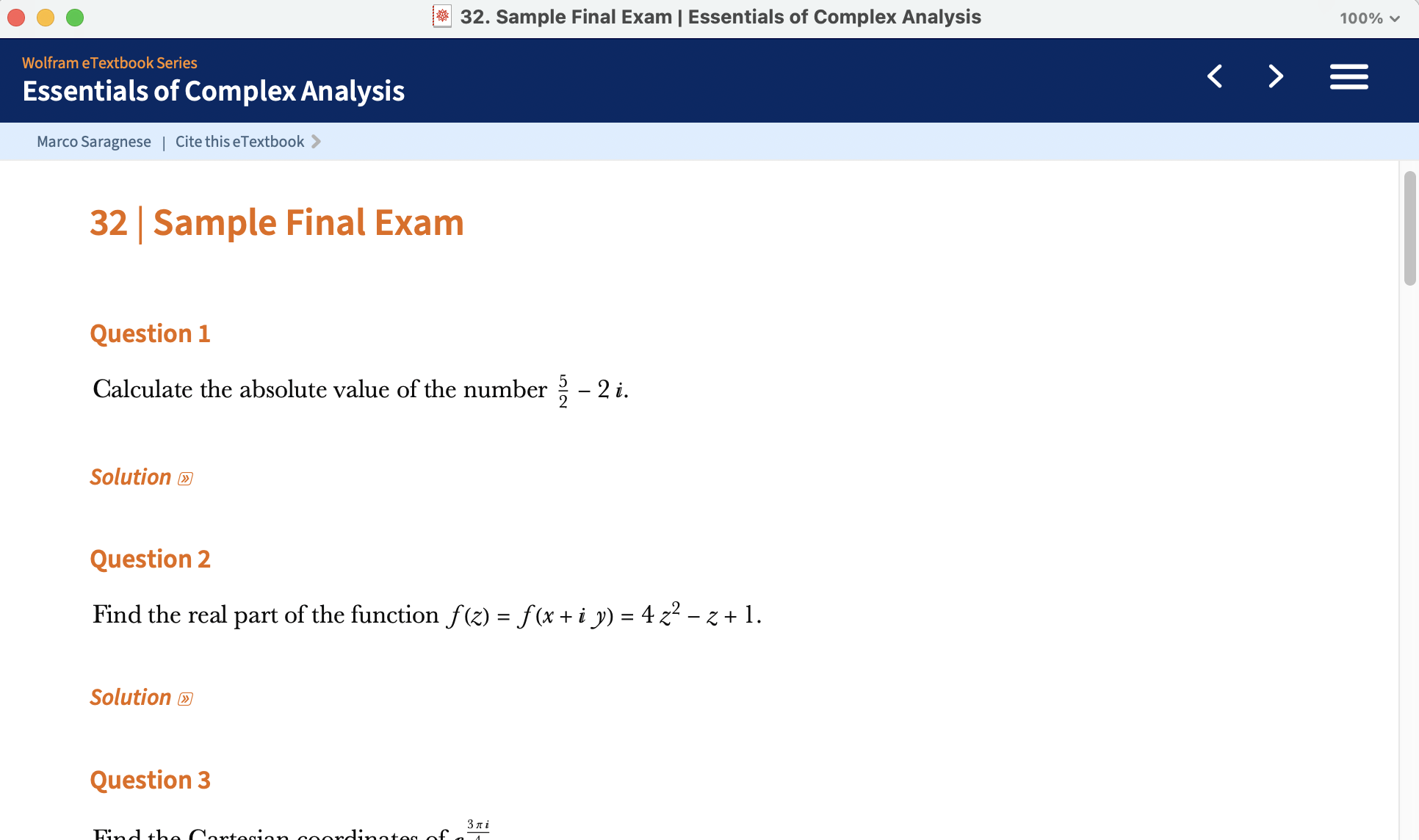
Sample Exam
The final chapter of the book contains a sample exam. Readers can test their proficiency by concretely engaging with the suggested problems, which often require a small calculation (solutions are included).
The exam can also be used as practice for the final exam in the corresponding online course.
The Author behind the Book
My name is Marco Saragnese—and I’m pleased to present my new ebook Essentials of Complex Analysis. Once upon a time, I was a student who depended on complex analysis in my study of physics. My hope is that future students across math, engineering, physics and other scientific disciplines will be supported in their pursuits.
Acknowledgements
I would like to thank Devendra Kapadia, Roger Germundsson, Paige Vigliarolo, Treyton Jansen, Henry Kwong, Juan Ortiz, Bailey Long, Anisha Basil, Cassidy Hinkle, Mariel Laugesen, Tim Shedelbower, Jamie Peterson, Roberto Martinez, Catherine Yao, Joyce Tracewell and the whole Wolfram U and Wolfram Media teams for their contributions to the publication of the ebook.
| Look out for more eTextbooks from Wolfram Media. |


Comments