 News, Views & Insights
Two New Wolfram Book Series to Advance Computational Work
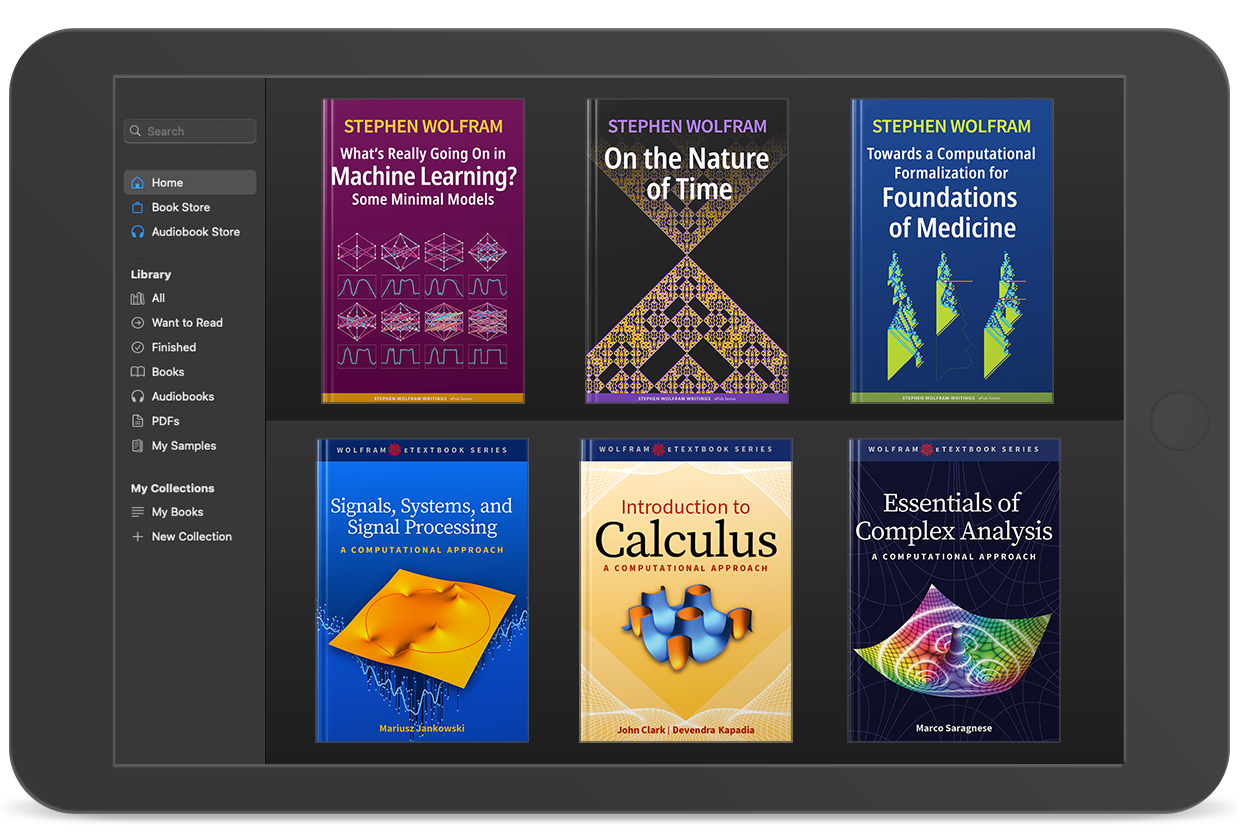
Months of groundwork came to fruition for Wolfram Media in 2025 with two new series taking off in earnest. As we look back on the year, we wanted to take the chance to highlight what we’ve been up to over the past 12 months and let you know what’s coming next. You might even want to share this post with anyone resolving to improve efficiency with more computation in 2026!
Wolfram eTextbook Series
Wolfram Media officially launched the Wolfram eTextbook Series in 2024 with the release of the debut title, Introduction to Calculus: A Computational Approach. Huge progress for the series was made in 2025, both in terms of authors producing new content and our production team tooling up to be able to bring titles to our readers more efficiently.
“The Wolfram eTextbook Series marks a shift in current academic courses, where today’s computational technology is being used to minimize obsolete tasks and streamline learning. Over time, the series will take on a more revolutionary form as computation becomes relevant to a broader range of fields for the first time: the computational X paradigm.”
This series is taking a computational approach to a wide variety of fields of interest to academics and working professionals alike. Readers should expect to see books covering well-established topics in a new way—the Wolfram Language way—where tedious hand-calculating tasks are reassigned to the computer and learners can focus on higher-level thinking objectives. This series is written by Wolfram’s own R&D professionals, often the same team members who developed the Wolfram Language functionality related to the book’s subject.
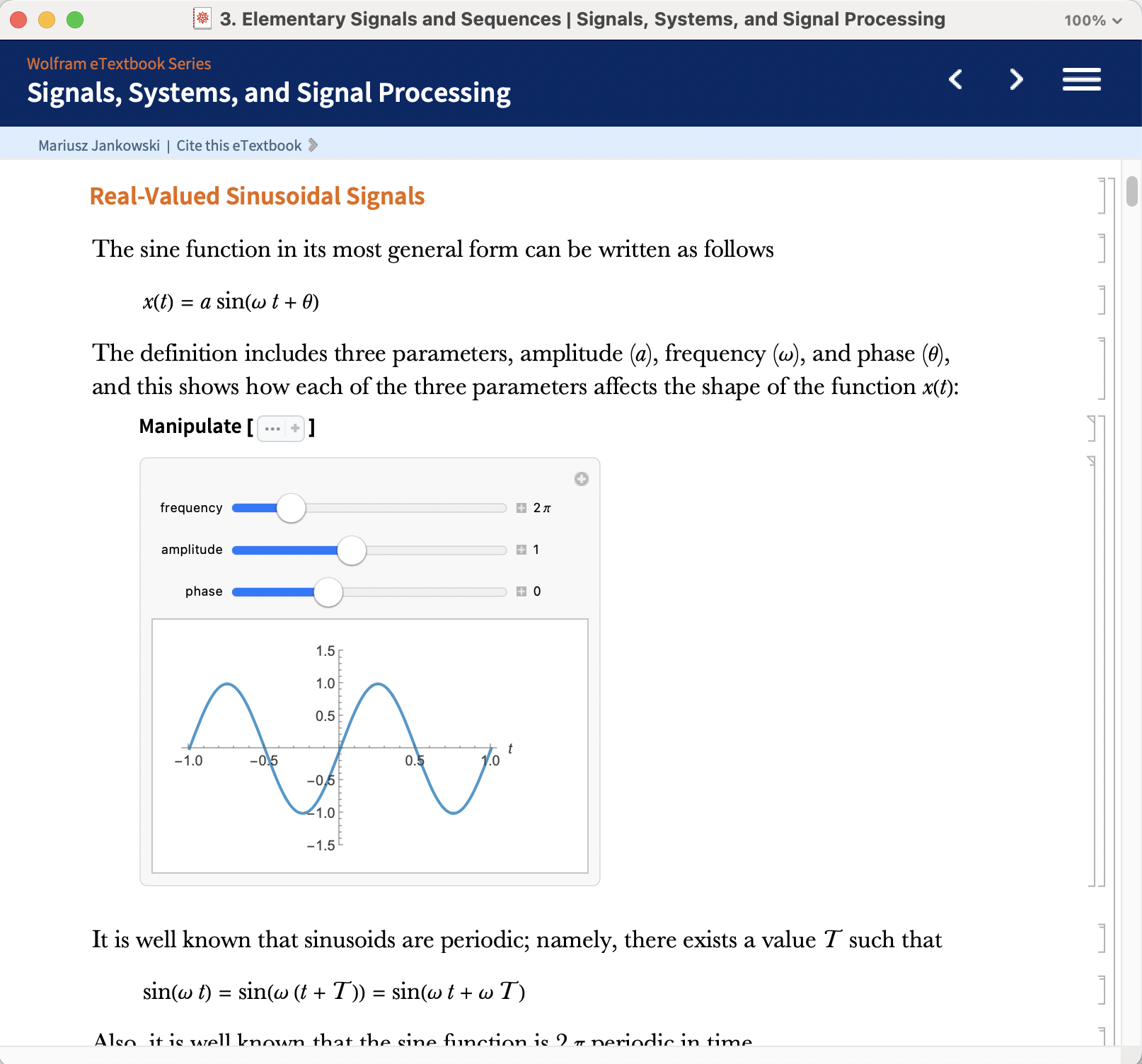
Our top goal with this series is to spread the word about how useful Wolfram can be across so many important fields, so we’re making these books available completely for free in interactive Wolfram Language format. We hope you’ll check them out and share them with your network. Even those who don’t yet have a Wolfram license can access the content via the free Wolfram Player. Every title in the series will come out first in the free Wolfram Notebook format and later in print and Kindle formats to offer readers a variety of options.
Presenting content in Wolfram Notebooks makes it immediately useful to readers; users can adjust dynamic visualizations and save their own copy of the notebook to edit and rerun code examples. The Wolfram eTextbook Series also focuses on books that are already or soon to be Wolfram U courses, creating a suite of free learning resources that allow users not just to read, but also to experience the content in practical, hands-on ways.
What’s Out So Far?
Introduction to Calculus: A Computational Approach »
Available formats: paperback, Kindle and Wolfram Notebooks (28.8 MB)
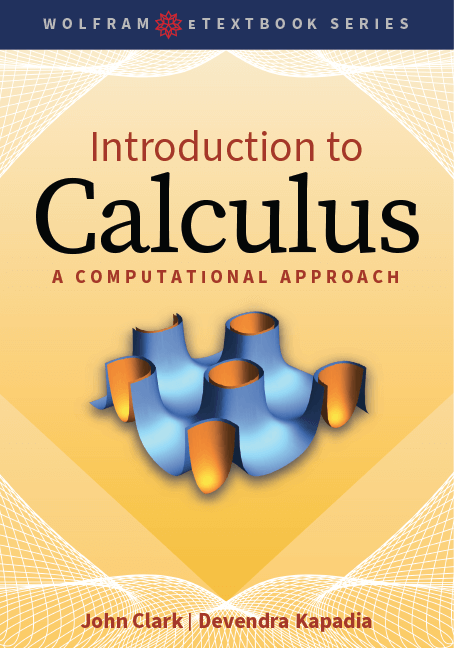
This ebook provides a comprehensive introduction to fundamental concepts in calculus and their applications, covering all of Calculus 1 and some of Calculus 2. The book starts with functions and limits, followed by differential calculus, and then moves on to integral calculus and a brief discussion of differential equations. It ends with the complete solution for a sample exam based on the AP Calculus AB course.
Signals, Systems, and Signal Processing: A Computational Approach »
Available formats: paperback, Kindle and Wolfram Notebooks (86.2 MB)
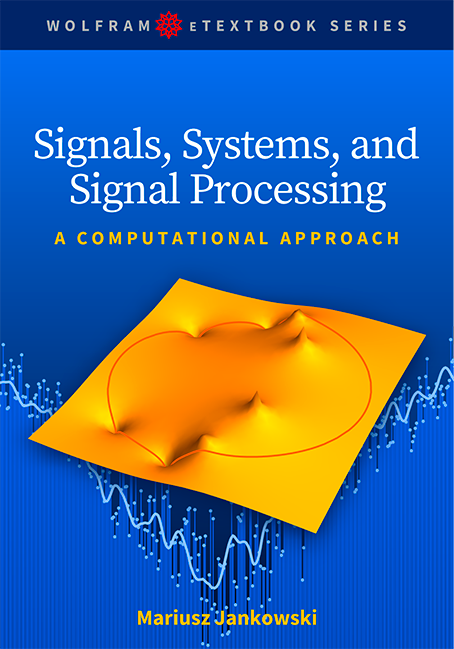
Signals, Systems, and Signal Processing provides a concise but comprehensive introduction to the concepts and methods of signals and linear time-invariant (LTI) systems that lie at the core of many applications in control, telecommunications, audio signal processing, speech recognition, computer vision, financial and genomic data analysis, sonar, radar and more. The topics presented in this text are a mainstay of almost every electrical, computer and biomedical engineering degree program worldwide. These topics include:
- Mathematical representations of continuous-time and discrete-time signals and LTI systems in time and frequency
- Analysis of signals and LTI systems using Fourier, Laplace and z-transforms
- Sampling of continuous-time signals
- An elementary introduction to filter design and signal processing
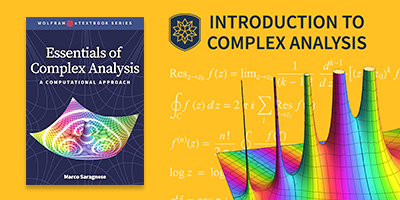
Essentials of Complex Analysis: A Computational Approach »
Available formats: Wolfram Notebooks (52.1 MB)
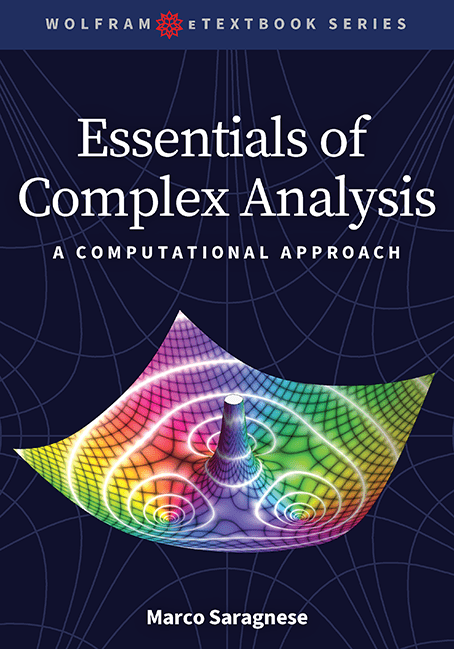
Essentials of Complex Analysis is an introduction to the fundamental concepts in complex analysis, suitable for a first course at the undergraduate level. The book covers the elementary functions, the Cauchy–Riemann equations, complex integration, Cauchy’s theorem and the residue theorem. It ends with a series of applications of complex analysis to hydrodynamics, transcendental equations, elliptic functions and more.
What’s Coming Next?
More great titles from our R&D experts will be published in 2026 and beyond!
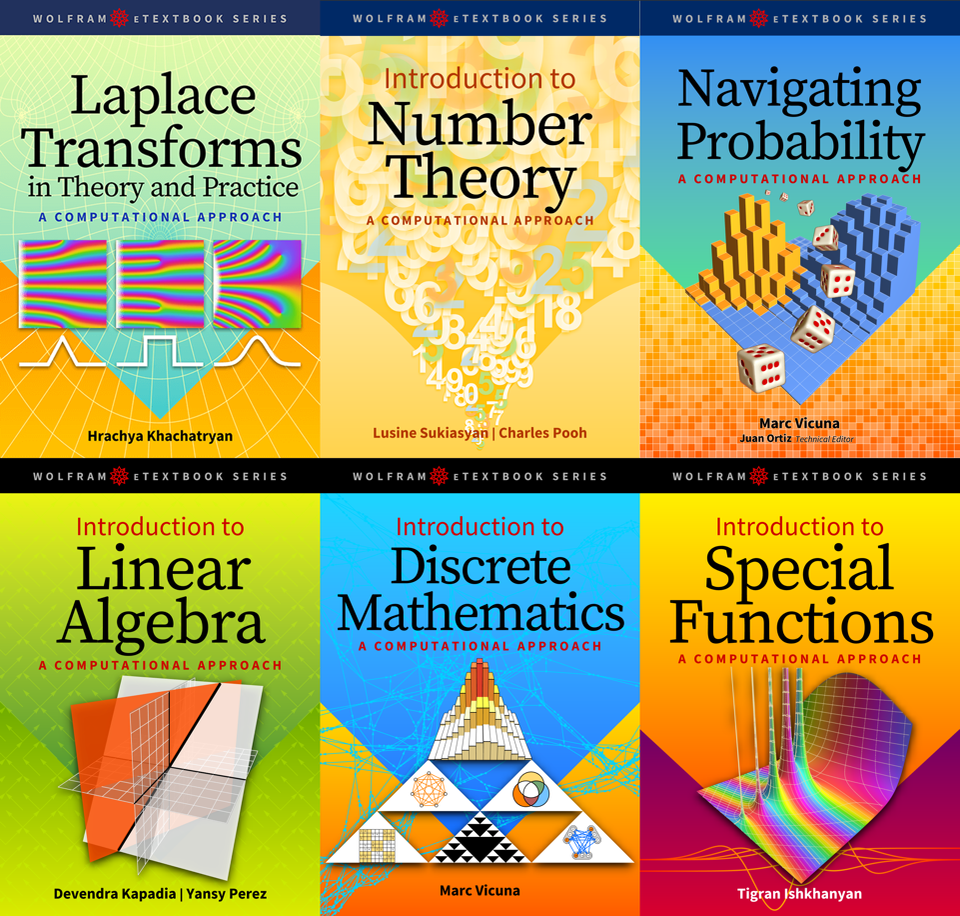
Also keep an eye out for prerelease offerings from the series coming to our Wolfram Media site soon. We’d love to get your feedback as we work on new textbooks!
Stephen Wolfram Writings ePub Series
As some of our readers may know, Stephen Wolfram has a fascinating blog on all things science and computation, plus some interesting tidbits from the life of a tech CEO. Noticing some readers were looking for more options for bookmarking their place in longer posts and reading content on more devices, Wolfram and our Wolfram Media team decided to try out converting his blog posts to ePubs. The response to the three available so far has been great, and we’re just getting started.
“Stephen Wolfram’s writings span physics, computation, AI and philosophy—but what sets them apart is how they connect these fields into coherent frameworks. Across decades of work, he has regularly returned to a central goal: showing how seemingly separate areas of knowledge can be understood through shared principles.
This ePub series makes those writings available as individual volumes, each uncovering connections between scientific and technological domains. Whether addressing the foundations of physics, the limits of AI or the nature of time, Wolfram uses computation as a common language—revealing patterns that extend far beyond their original domains.”
Readers of these ePubs should look forward to a rich variety of content available on more apps and devices than ever before, including Kindle, Apple Books, Kobo, Google Play Books and more.
What’s Out So Far?
What’s Really Going On in Machine Learning? Some Minimal Models »
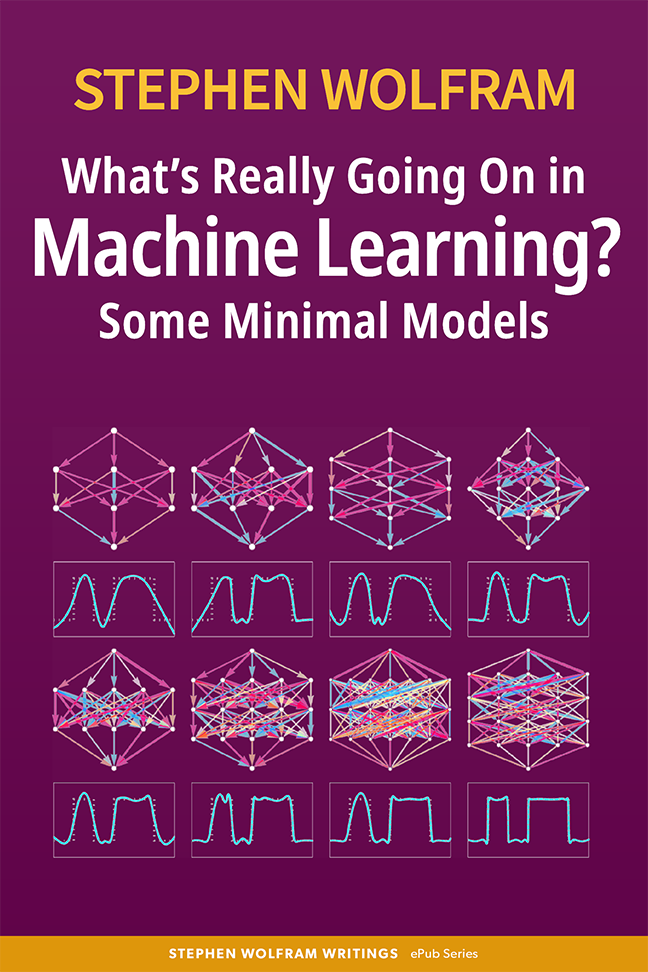
The Hidden Workings of Machine Learning
Why does machine learning work at all? Neural networks power everything from image recognition to language models, yet the science behind their success remains strangely elusive. In this essay, Stephen Wolfram strips machine learning down to its barest forms—minimal models built from simple rules—and shows that even at this level, systems can learn. What emerges is a surprising picture: machine learning doesn’t rely on carefully engineered structures but on the natural complexity of the computational universe.
On the Nature of Time »
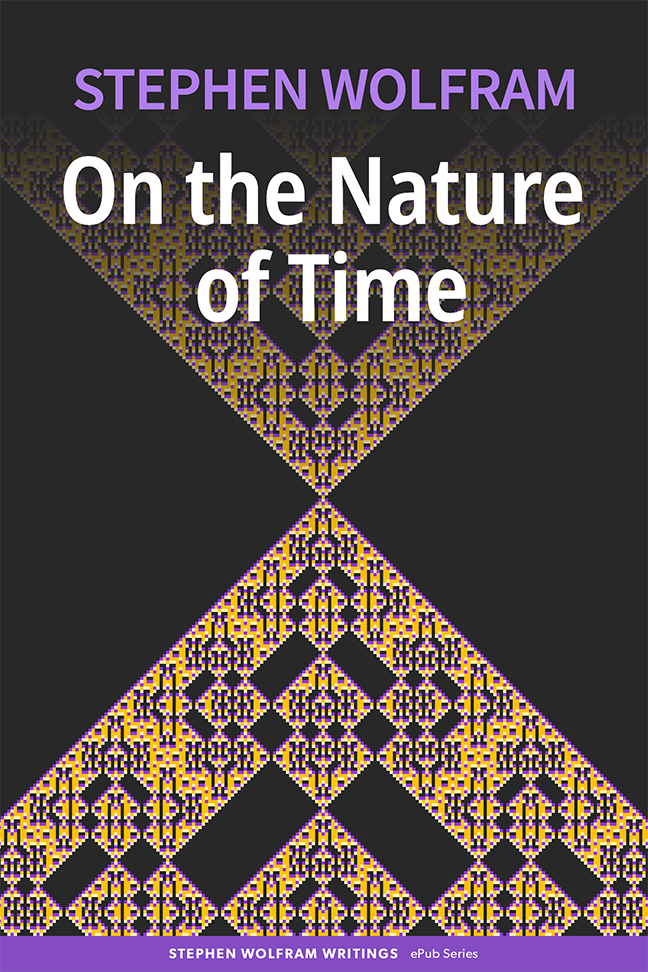
What is time, really—and why does it seem to flow?
In this short essay, Stephen Wolfram explores time not as a coordinate or backdrop but as something generated by the ongoing computation of the universe itself. Drawing on ideas from his Physics Project, he explains how the passage of time—our experience of one moment giving way to the next—arises from the limits of what observers like us can compute. We can’t see the future all at once; we have to compute it step by step.
Towards a Computational Formalization for Foundations of Medicine »
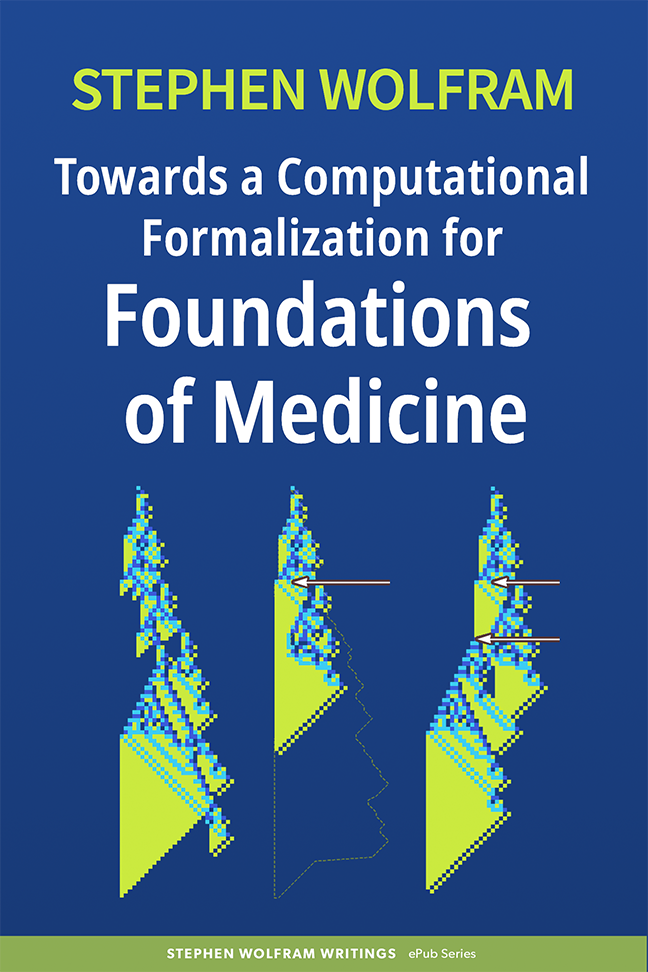
A Metamodel for Foundations of Medicine
What would a general theory of medicine look like? Stephen Wolfram proposes one grounded in computation. By evolving simple programs as model organisms, he shows how perturbations can stand in for disease and how counter-perturbations can mimic treatment, with genetic diversity reflected in variant rules. The results mirror core challenges of medical science: the wide range of outcomes, the difficulty of prognosis and the uneven success of treatments. The essay positions medicine alongside physics and evolution as a domain whose essential features can be captured in abstract computational form.
What’s Coming Next?
We’ll continue to produce ePub versions of Stephen Wolfram’s blog posts—both as new ones are released and circling back to old posts hand-selected by Wolfram. Keep an eye on both his Writings page and your favorite ebook store for new releases.
Stay in Touch!
As 2026 kicks into gear, we want to thank you for your support of Wolfram Media. We hope some of the books we’ve published so far have helped you along your journey with Wolfram technology, and we can’t wait to bring you more helpful coding tips and insightful content in 2026. Please be sure to visit our site and sign up for updates to stay in the know on all of our latest publications and prerelease offerings. Cheers to a great start to 2026!


Comments